A $500 dinner bill might suggest a booming restaurant business. But behind the white tablecloths and premium cuts of steak, many steakhouses are operating on razor-thin margins.
Across Chicago, rising beef prices, higher wages, rent, and other operating costs are squeezing restaurant profits,leaving even high-end establishments with surprisingly little left over after a full dining room.
A Costly Dinner With Modest Returns
At Kindling, a fine-dining restaurant located inside Chicago’s tallest building, a dinner for four can easily reach $500. After food, labor, rent, and other fixed expenses are accounted for, the profit from that meal can be as little as $25.
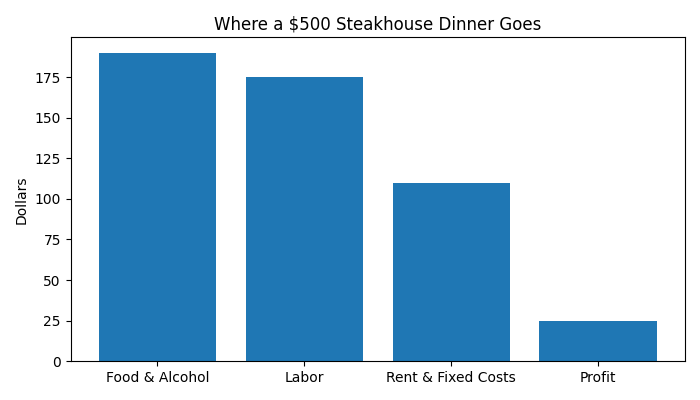
“That margin is slim,” says the restaurant’s chef partner, noting that costs across nearly every category have increased sharply over the past few years.
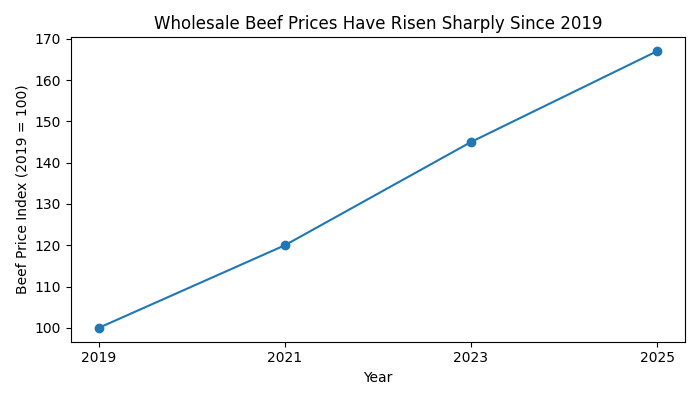
Beef prices are a major factor. Wholesale costs for steak cuts have risen dramatically since before the pandemic, with some restaurants reporting year-over-year increases of around 40% for their most popular items.
Beef Prices Are Rising Faster Than Menu Prices
Federal data shows wholesale beef prices are roughly two-thirds higher than they were before the pandemic. Tight cattle supplies, strong demand, and higher production costs have all contributed.
For steakhouses, this creates a difficult balancing act. Raising menu prices too aggressively risks alienating customers, while holding prices steady compresses margins even further.
Many operators say the traditional rule—keeping food costs near 35% of menu prices—is increasingly hard to meet. For premium steaks, ingredient costs can now approach or exceed 50% of what customers pay.
Labor, Rent, and Insurance Add More Pressure
Food is only part of the equation. Labor costs have surged as restaurants compete for experienced cooks and servers, particularly in fine dining, where service expectations are high.
In Chicago, labor expenses have climbed further as the city phases out a lower minimum wage for tipped workers. Rent, utilities, insurance, and equipment costs have also risen, especially in dense urban neighborhoods.
For newer restaurants, upfront investment is another hurdle. Build-outs can cost hundreds of thousands—or even millions—of dollars before the first steak is served.
Tariffs and Competition Complicate the Picture
Some steakhouses rely on imported beef for specialty cuts. New tariffs on certain imports have pushed prices higher, while domestic suppliers face their own constraints as U.S. cattle herds sit at their lowest levels in decades.
At the same time, grocery stores are offering higher-end steak cuts than in the past, giving consumers more options to cook premium meals at home—often at a lower cost than dining out.
That competition limits how much restaurants can raise prices without losing traffic.
Holidays Help, But Not Enough
Late-year holidays remain the strongest period for steakhouses, as customers are more willing to spend on celebratory meals. But once the holiday rush fades, sales typically slow while costs remain elevated.
Some operators are experimenting with technology to reduce expenses, such as automating phone orders or streamlining kitchen prep. Others are relying more heavily on high-margin items like sides, desserts, and cocktails to offset steak costs.
Still, many say these measures only soften the blow rather than solve the underlying problem.
An Industry Under Strain
Steakhouses may cater to affluent customers, but rising prices do not automatically translate into higher profits. Instead, they reflect the growing cost of doing business in today’s economy.
For diners, the result is more expensive meals. For restaurant operators, it is a constant effort to stay afloat as inflation reshapes the economics of dining out—one steak at a time.
Related Reads on Wolfow.com
- Microsoft Layoffs AI 2025: Automation Reshapes Tech Jobs
- Affirm Gets $500M Credit Injection from Prudential’s PGIM
- JPMorgan & Amex Raise Premium Card Fees: Here’s Why You’ll Still Pay
- Why Your Next Phone or PC May Cost More: AI Sparks a Global Memory Chip Crunch
Source: Based on reporting by The Wall Street Journal.