Walmart delivered a solid top-line beat in Q2 FY2027, yet the stock plummeted 9% following earnings. Analysts quickly slashed their Walmart price target after spotting key accounting anomalies behind the numbers. Enterprise revenue reached $187.9 billion, up 5.9% year-over-year. However, deep structural headwinds and real wage stagnation spooked institutional Wall Street investors.
The One-Time Tariff Windfall
Walmart reported a surprising 28.8% spike in operating income to $9.38 billion. But a single $2.9 billion tariff refund heavily subsidized this profit jump. The Supreme Court recently invalidated IEEPA tariffs from 2025. This massive cash injection provided a temporary 750-basis-point boost to quarterly operating profit margins.
Instead of pocketing the windfall, executive management funded 11,000 aggressive price rollbacks. They deployed these savings to defend consumer foot traffic against severe low-income spending fatigue. Core U.S. consumer purchasing power contracted as headline July retail sales fell 0.6% nationwide.
source: Wolfow
Why Analysts Slashed the Walmart Price Target
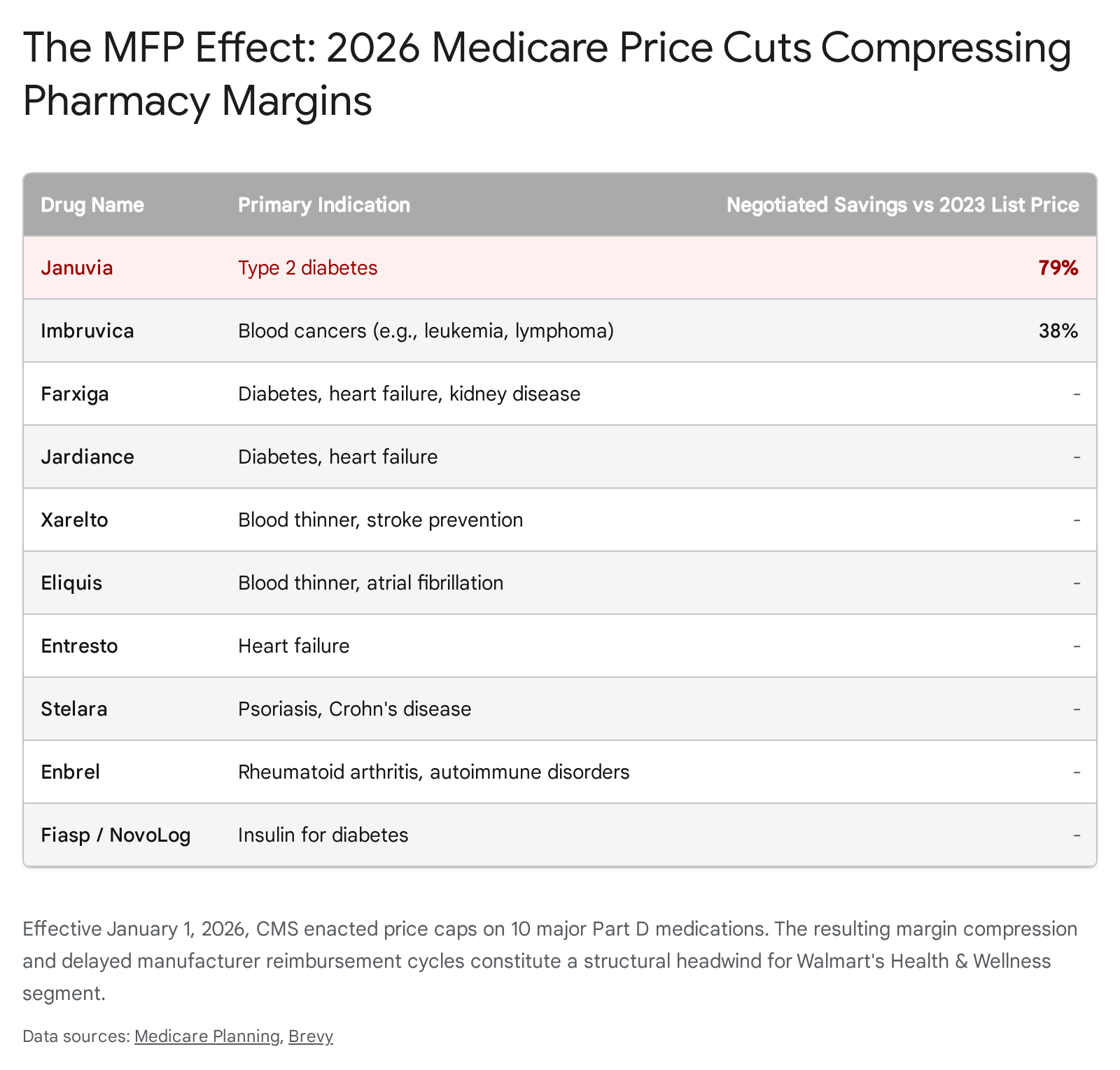
Core U.S. comparable sales slowed to 2.6%, down significantly from 4.1% in Q1. New Maximum Fair Pricing (MFP) regulations created a severe 125-basis-point drag on health and wellness segment sales. Under federal rules, Medicare capped prices on 10 major brand-name drugs by 38% to 79%.
Pharmacy profit margins collapsed as traditional dispensing spreads vanished under delayed manufacturer refund rules. This healthcare margin squeeze will intensify further when Medicare adds 15 additional blockbuster drugs next year. Regulatory shifts in healthcare markets continue to reshuffle sector valuations, echoing trends seen in major market leaders like Eli Lilly.
The K-Shaped Consumer Pressure
Macroeconomic data shows a clear divergence across household income brackets:
- Sam’s Club Ticket Sizes: Average ticket size dropped 2.5% despite a 7% surge in transaction volume.
- Private Label Shift: Shoppers increased visit frequency but aggressively traded down to house brands.
- Discretionary Contraction: Customers bypassed high-margin electronics and home goods to buy basic groceries.
Digital Pivot vs. High Valuation Risk
To offset core retail margin erosion, Walmart is aggressively building high-margin alternative revenue streams:
- Global E-commerce Growth: Surged 23% overall, driven by 24% expansion in U.S. digital channels.
- Fulfillment Automation: Automates over 50% of total e-commerce fulfillment volume across regional nodes.
- Global Advertising Revenue: Soared 38%, boosted by acquiring connected TV platform Vibe.co for $1.4 billion.
- Store-Fulfilled Deliveries: Fast delivery orders reached a record high of 37% of total volume.
Despite these impressive digital milestones, financial analysts remain concerned about underlying retail profit durability. JPMorgan cut its Walmart price target from $137 down to $125, labeling the underlying results a tangled operational setup. As highlighted by Yahoo Finance, lapping this year’s non-recurring tariff windfall next year will mechanically stall baseline earnings growth. Trading at a high 37 times earnings multiple, any operational misstep leaves the Walmart price target vulnerable to further valuation cuts.