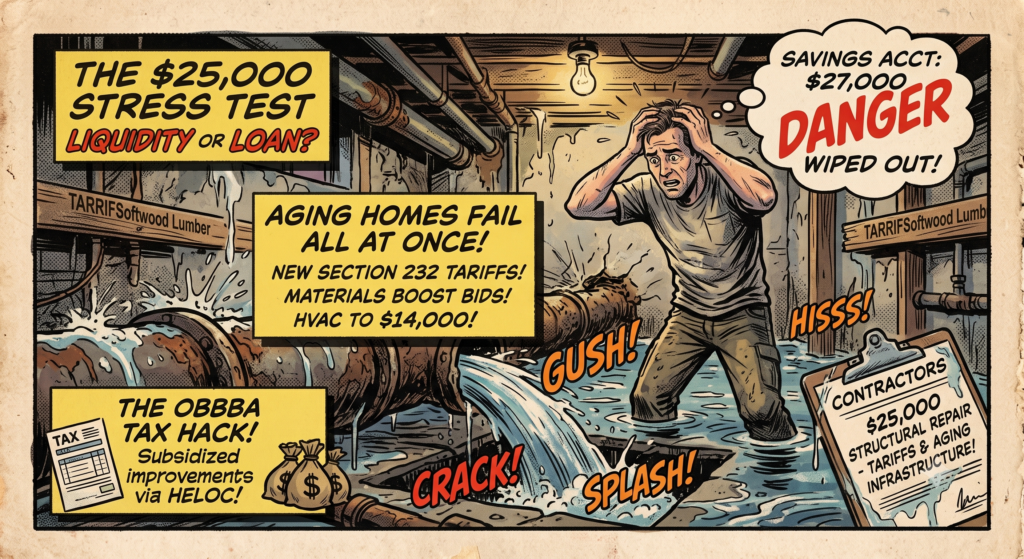
The $25,000 Stress Test
Imagine having a cozy $27,000 sitting in your emergency savings account. Then, a $25k home repair hits, threatening to wipe out almost your entire safety net in one fell swoop.
This exact scenario, recently highlighted on Yahoo Finance, is the ultimate modern homeowner’s dilemma. But before you write that fat check and drop your liquidity to zero, let’s run the numbers like a corporate treasurer.
The Liquidity Trap
The American safety net is currently held together by dental floss and wishful thinking. Recent data reveals that 59% of Americans can’t even cover a sudden $1,000 emergency expense without borrowing. Wiping out your cash to pay a contractor leaves you completely exposed to the credit markets.
If another crisis hits, you’ll be forced to put it on an unsecured credit card carrying a brutal 25% interest rate. Keeping your safety net intact isn’t just comforting—it’s high-yield insurance against wealth-destroying debt.
The Rising Bill of Homeownership
Maintaining an aging home has never been more expensive than in 2026. The median American house is now over 40 years old, meaning major structural and mechanical systems are failing all at once. To make matters worse, aggressive trade tariffs on lumber, steel, and copper have injected artificial inflation directly into residential construction bids.
- Annual maintenance costs for single-family homes now average between $8,800 and $11,196.
- New Section 232 tariffs have tacked on a 10% duty to Canadian softwood lumber and up to 50% on essential metals.
- Replacing a major HVAC system can easily set you back up to $14,000 in this high-tariff environment.
source: Wolfow
Maximizing Your Renovation ROI
Not all home renovations are created equal when it comes to resale value. Sinking $25,000 into functional exterior replacements yields a massive equity boost, while high-end interior updates fall flat.
- Garage Door Replacement: Yields an incredible 268% average return on investment.
- Steel Entry Door: Recoups approximately 216% of its initial cost.
- Major Upscale Kitchen: Recoups a pathetic 36%, meaning most of that cash is permanently sunk.
The Tax Code Hack (OBBBA)
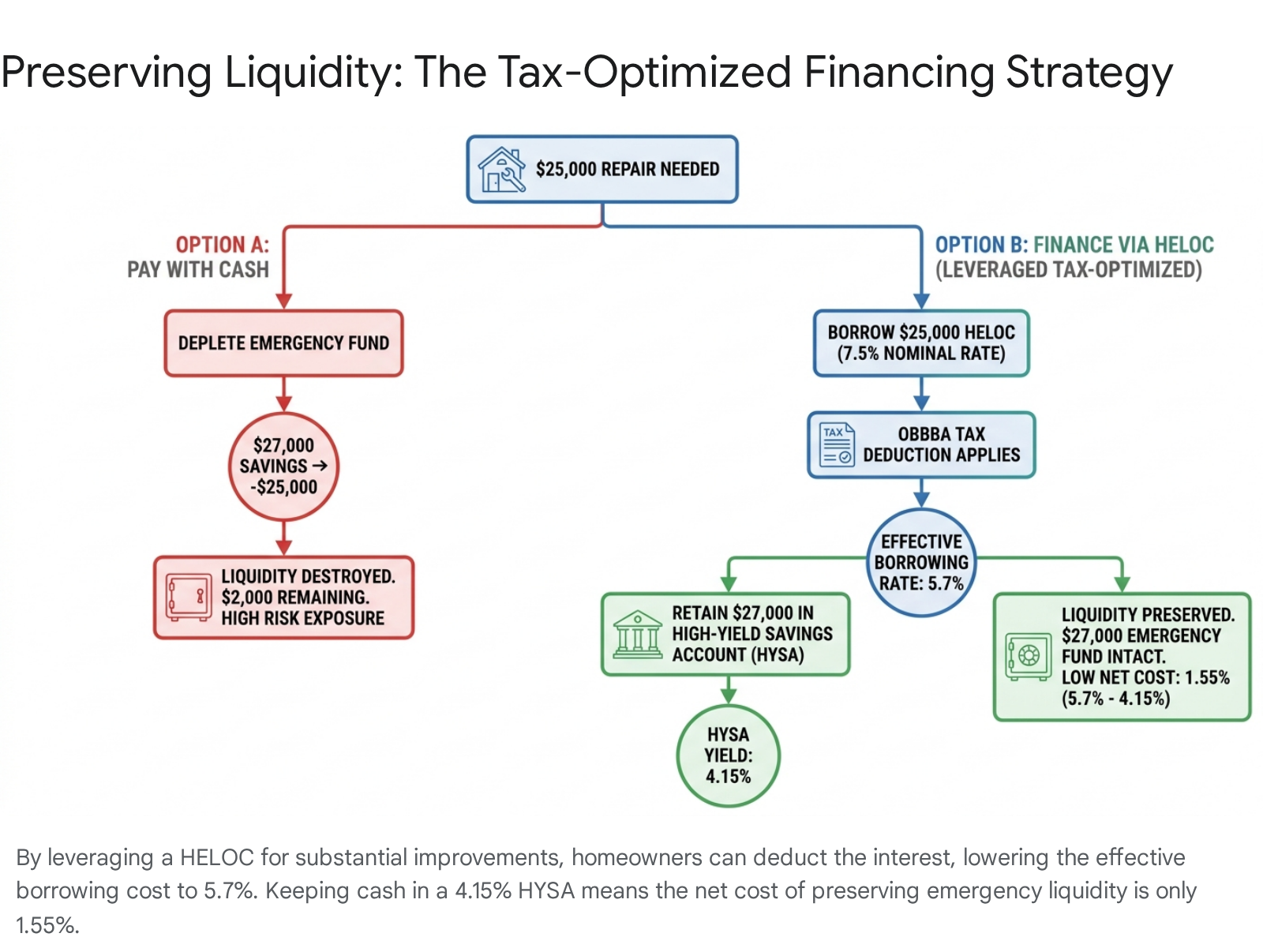
The One Big Beautiful Bill Act (OBBBA), signed into law in July 2025, fundamentally changed the math by making HELOC interest on ‘substantial improvements’ tax-deductible. This means Uncle Sam will effectively subsidize your structural home repairs if you borrow instead of using cash.
If you keep your $27,000 in a High-Yield Savings Account earning 4.15% APY, you preserve your vital liquidity. At the same time, financing the repair with a 7.50% HELOC only costs you an effective 5.70% after tax deductions.
This strategy leaves you paying a microscopic 1.55% net premium to maintain a rock-solid, fully liquid safety net. Ultimately, treating your home as a sophisticated balance sheet is the smartest move you can make in the 2026 economy.