The military conflict in the Middle East recently closed the Strait of Hormuz. This sudden blockade disrupted critical shipping lanes for global energy markets. Japan previously imported over 90% of its crude oil through this single waterway. Consequently, Tokyo faced severe trade deficits and soaring import costs. To protect its industrial foundation, Prime Minister Sanae Takaichi unveiled the POWERR GX strategy. This aggressive state plan rewires how Japan buys, transports, and stores vital fuel.
How the POWERR GX Strategy Rewires Energy Security
Japan relies on foreign imports for 97% of its petroleum needs. Strategic petroleum reserves provided a short-term shield, but reserves remain finite. Under the POWERR GX strategy, Tokyo now acts as an active market architect. State agency JOGMEC is driving deep structural shifts:
- Bypass Infrastructure: Japan finances pipelines in Saudi Arabia and the UAE to transport crude directly to non-Hormuz ports.
- Transportation Subsidies: A new wholesale levy funds direct rebates for refiners facing inflated freight and insurance fees.
- Naphtha Reserves: New stockpiling mandates protect naphtha supplies, securing essential feedstocks for domestic chemical and plastic plants.
American Crude Imports Surge as Coal Returns
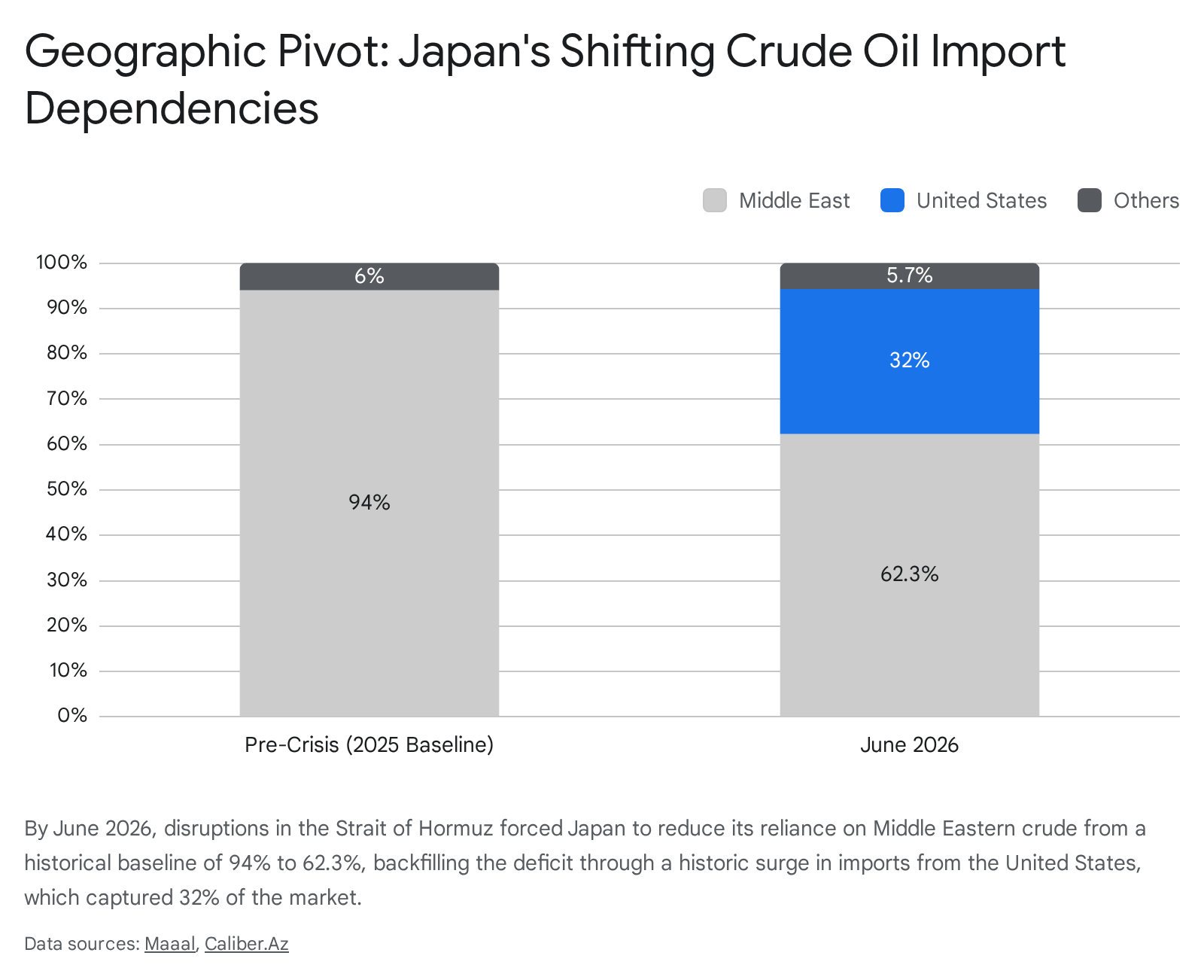
Japanese refiners rapidly adjusted their procurement networks. In June 2026, imports of U.S. WTI Midland crude surged 459.5% year-on-year. American crude captured a massive 32% market share in Japan. Meanwhile, Middle East import market share dropped from 95% down to 62.3%.
source: Wolfow
To protect electricity grids, utilities temporarily adjusted their power generation mix:
- Coal Plant Restarts: The government temporarily eased restrictions on older coal plants to cut natural gas consumption.
- Gas Conservation: Coal generation rose 5% in June 2026, saving 500,000 tons of imported natural gas annually.
- Nuclear Acceleration: Japan targets a 20% nuclear power baseline by accelerating reactor restarts through 2030.
Monetary Friction and Inflation Control
Skyrocketing fuel costs quickly leaked into domestic consumer prices. Wholesale inflation accelerated to 7.2% year-on-year in July 2026. The Japan Crude Cocktail price surged 84.7% to a record high of 117,684 yen per kiloliter. Core consumer prices climbed 1.8%, well above historical averages.
To combat this supply-side shock, the Bank of Japan raised its policy rate to 1.0% in June. Economists expect another rate hike to 1.25% in September. Central banks globally struggle with similar inflation dilemmas, mirroring the fed rate divide troubling American monetary policy.
By executing the POWERR GX strategy, Japan builds a durable defense against overseas supply shocks. Government backstops will guarantee shipping insurance when private insurers retreat. As detailed in a Yahoo Finance report, Tokyo is actively taking control of its energy destiny.