
Eli Lilly has crossed a historic financial threshold in mid-2026. The Eli Lilly valuation officially surged past $1.1 trillion. Explosive global demand for its weight-loss therapies engineered this dramatic market shift. According to an analysis on Yahoo Finance, Bank of America raised its price objective to $1,344 per share. Institutional investors now view the pharmaceutical giant as an essential defensive growth asset.
What Drives the Eli Lilly Valuation Surge?
The company reported Q2 2026 revenue of $22.97 billion. This represents a staggering 47.7% year-over-year jump. Global volume growth rocketed by 60%, completely overwhelming a 13% decline in average realized prices.
source: Wolfow
- Mounjaro Sales: Generated $9.94 billion in Q2, up 91% year-over-year.
- Zepbound Growth: Delivered $4.93 billion, marking a 46% quarterly increase.
- Gross Margins: Non-GAAP gross margins expanded to 86.3%, showing immense manufacturing leverage.
- International Expansion: Overseas revenue jumped 80% to $8.6 billion after inclusion in China’s national drug list.
- Guidance Hike: Raised full-year 2026 revenue targets to a range of $85 billion to $87 billion.
Foundayo and the Medicare Expansion
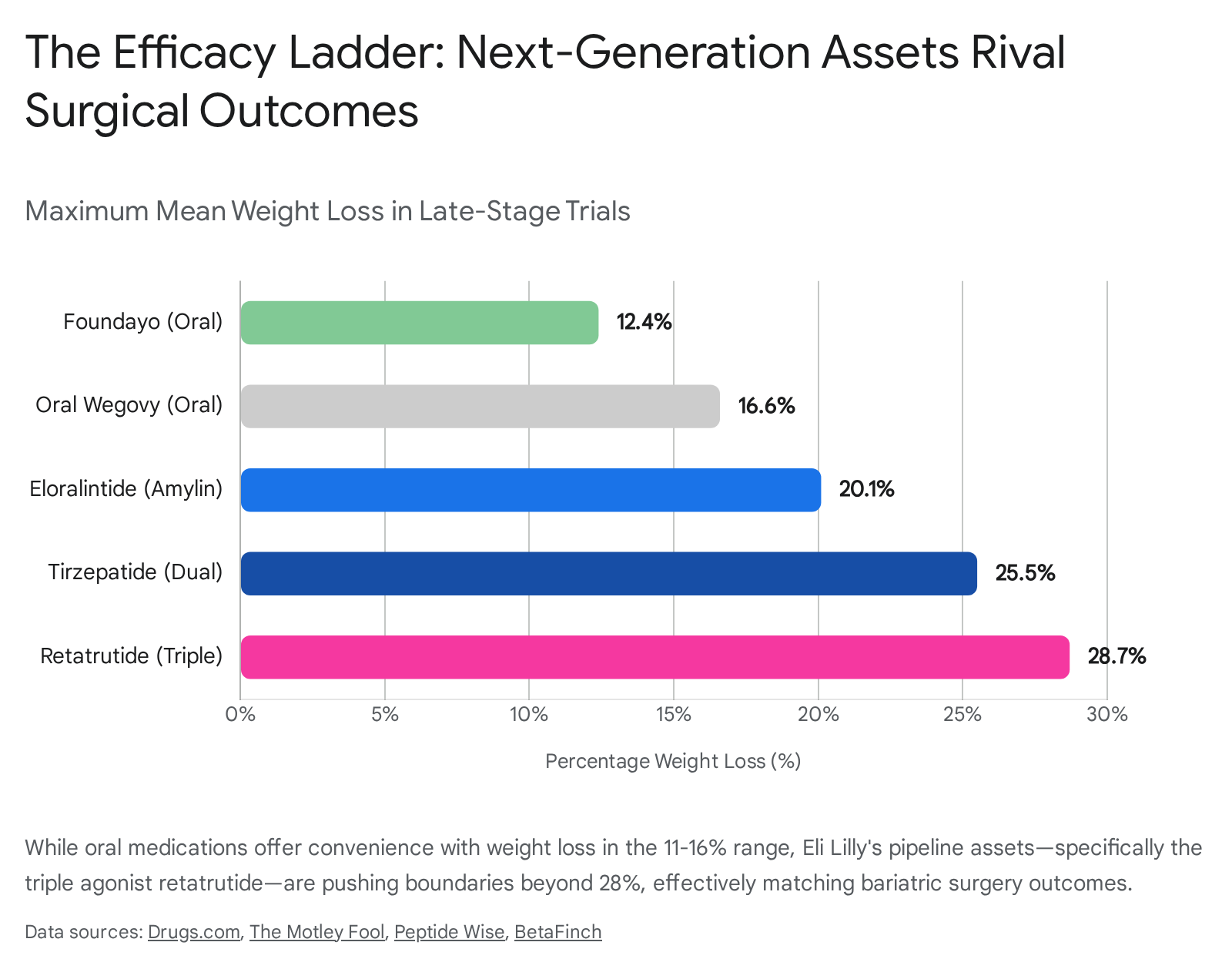
Eli Lilly recently launched Foundayo, a daily oral weight-loss pill. Unlike older peptide drugs, this small-molecule treatment requires no dietary fasting restrictions. Weekly prescriptions recently surpassed 38,900 as physicians quickly embraced the format. Prescribers expanded rapidly from 8,000 to nearly 36,000 physicians in one quarter. Roughly 80% of Foundayo patients are completely new to GLP-1 therapies.
- Medicare GLP-1 Bridge: CMS launched a pilot program offering $50 monthly copays for 20 million beneficiaries.
- Expanded Access: Unlocks massive demand across patients with BMIs over 35 or severe health conditions.
- Duopoly Advantage: Eli Lilly controls 60.1% of the total U.S. incretin market against competitor Novo Nordisk.
Pipeline Power and Macroeconomic Ripple Effects
Long-term pipeline innovation actively supports the expanding Eli Lilly valuation. Clinical trials for triple-agonist retatrutide showed an unprecedented 28.3% mean body weight reduction. The triple-agonist molecule increases basal energy expenditure to burn fat more efficiently. Meanwhile, selective amylin agonist eloralintide demonstrated up to 20.1% weight loss in Phase 2 trials.
These metabolic drugs are creating massive secondary economic effects. Households on weight-loss treatments slash grocery spending by 5.3% within six months. Fast-food restaurant visits drop by roughly 8%. J.P. Morgan estimates an annual $30 billion food industry revenue reduction by 2030. High-protein products like whey and poultry see surging demand while sugary snacks suffer. Driven by deep clinical moats, Eli Lilly continues to solidify its structural market dominance.