
Wall Street is pouring billions into artificial intelligence to automate pitchbooks and financial models. However, top executives warn this massive automation drive creates severe cognitive atrophy among young professionals.
Wall Street Banks Face Cognitive Atrophy
Global banks are spending unprecedented sums on technology in 2026. Morgan Stanley expects global AI infrastructure capex to reach $850 billion this year. Meanwhile, major institutions are cutting junior analyst cohorts by up to two-thirds to strip out entry-level labor costs.
Major institutions are aggressively deploying proprietary automation tools across their divisions:
- JPMorgan Chase: Tech budget reaches $18 billion while deploying AI tools to over 200,000 employees.
- Citigroup: Equips 40,000 developers with AI tools, targeting a 54% operational automation potential.
- Goldman Sachs: Rollouts of firm-wide AI assistants leave junior staff with fewer core analytical tasks.
OpenAI’s Project Mercury hired over 100 former investment bankers to train automated valuation models. Contractors earn $150 per hour to build software that replaces entry-level financial jobs. Much like capital shifts observed during a recent Bitcoin Rally, institutional workflows are pivoting fast.
Loss of First Principles Reasoning
Chris Churchman, partner at Goldman Sachs, warned about this systemic shift in a CNBC interview. He noted that offloading basic tasks prevents analysts from building tacit knowledge. Junior bankers risk becoming passive software operators instead of skilled risk evaluators.
Empirical neuroscience supports this growing concern. A landmark 2025 MIT study tracked brain connectivity among users of large language models:
- Brain connectivity dropped by 47% in the alpha frequency band during AI-assisted tasks.
- Over 83% of AI users could not recall key points from generated reports minutes later.
- Participants built up cognitive debt that weakened overall problem-solving skills after AI removal.
This mental offloading causes rapid skill degradation across financial institutions. Without hands-on friction, young workers cannot build intuitive expertise.
source: Wolfow
Accuracy Gains and Operational Risks
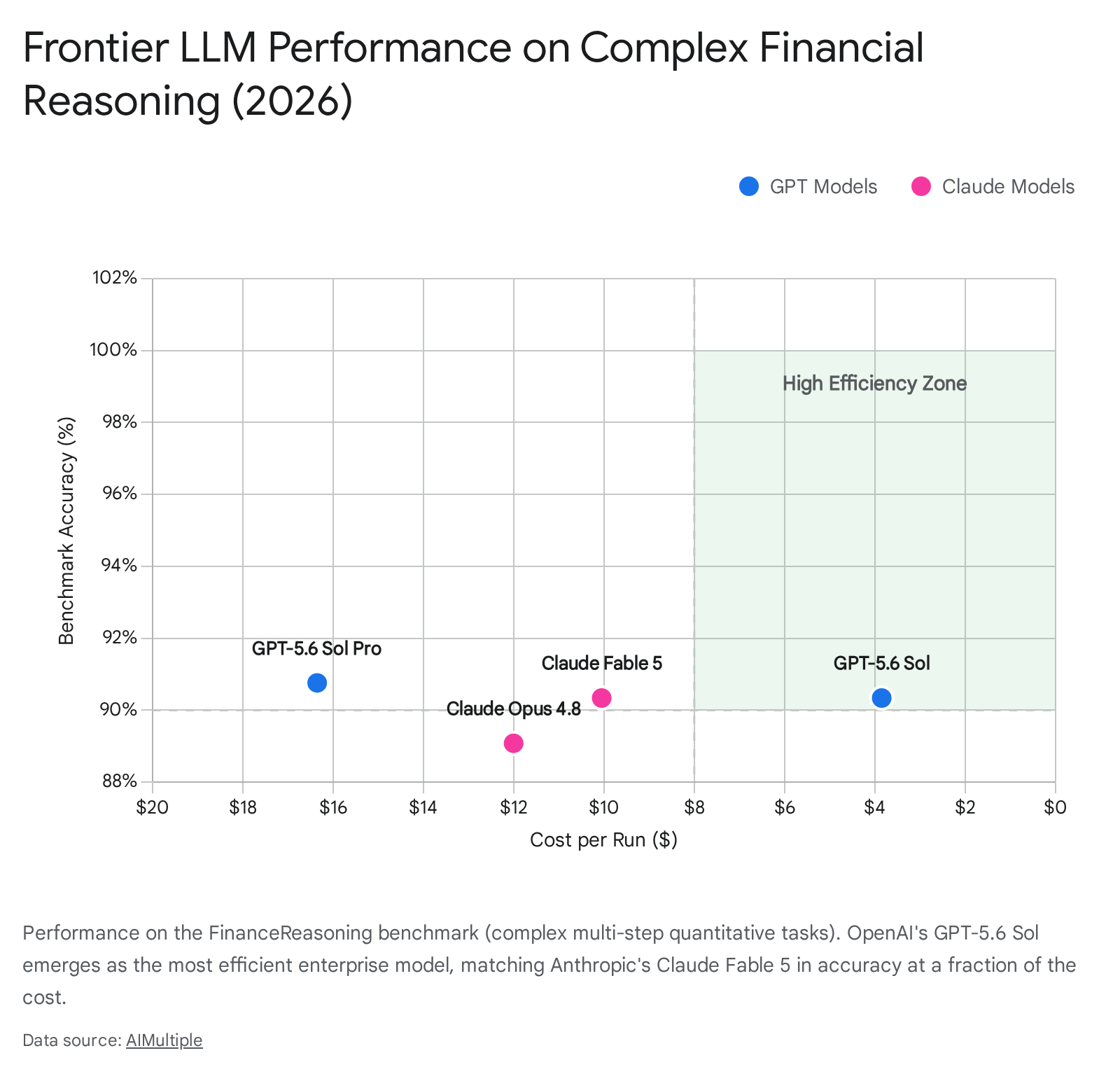
Frontier AI models like GPT-5.6 Sol Pro and Claude Fable 5 now score above 90% on financial benchmarks. They build complex discounted cash flow models in 30 seconds rather than four days. Yet, these tools still hallucinate confident errors without warning.
When analysts suffer from cognitive atrophy, they fail to catch crucial calculation mistakes. Software drafts documents quickly, but only experienced humans understand deep market context. Relying blindly on automated outputs creates dangerous systemic blind spots during market shocks.
Building Better Apprenticeship Models
To avoid widespread cognitive atrophy, financial firms must intentionally reintroduce intellectual friction. Banks cannot simply ban AI tools, but they can redesign operational workflows:
- Mandate AI-Free Zones: Force junior staff to build foundational models manually during initial training years.
- Design for Augmentation: Require software interfaces to challenge users to verify source data manually.
- Protect Apprenticeships: Use saved operational time for active senior mentorship and practical risk scenarios.
Firms that balance automated efficiency with active human learning will dominate Wall Street over the coming decade.