The bond market is sending a clear warning signal to Washington. As total U.S. national debt breaks past $40 trillion, institutional investors are openly defying the Bessent Put and sending borrowing costs sharply higher.
The $40 Trillion Debt Wall
Treasury Secretary Scott Bessent attempted to calm sovereign debt markets with aggressive buyback announcements. However, traders remain unconvinced. Structural deficits continue to expand at a rapid pace.
- Record Debt Expansion: The U.S. national debt crossed $40 trillion after adding its latest trillion in just five months.
- Spiking Borrowing Costs: The 30-year Treasury yield surged to 5.337%, marking its highest point since 2007.
- Dynamic Deficits: The “One Big Beautiful Bill Act” will add $4.7 trillion to national debt over the next decade.
source: Wolfow
Why Traders Are Fading the Bessent Put
Treasury officials doubled quarterly long-end buybacks to $16 billion. They also signaled plans to tap the $935 billion Treasury General Account. Despite these efforts, Wall Street recognizes the clear limits of the intervention.
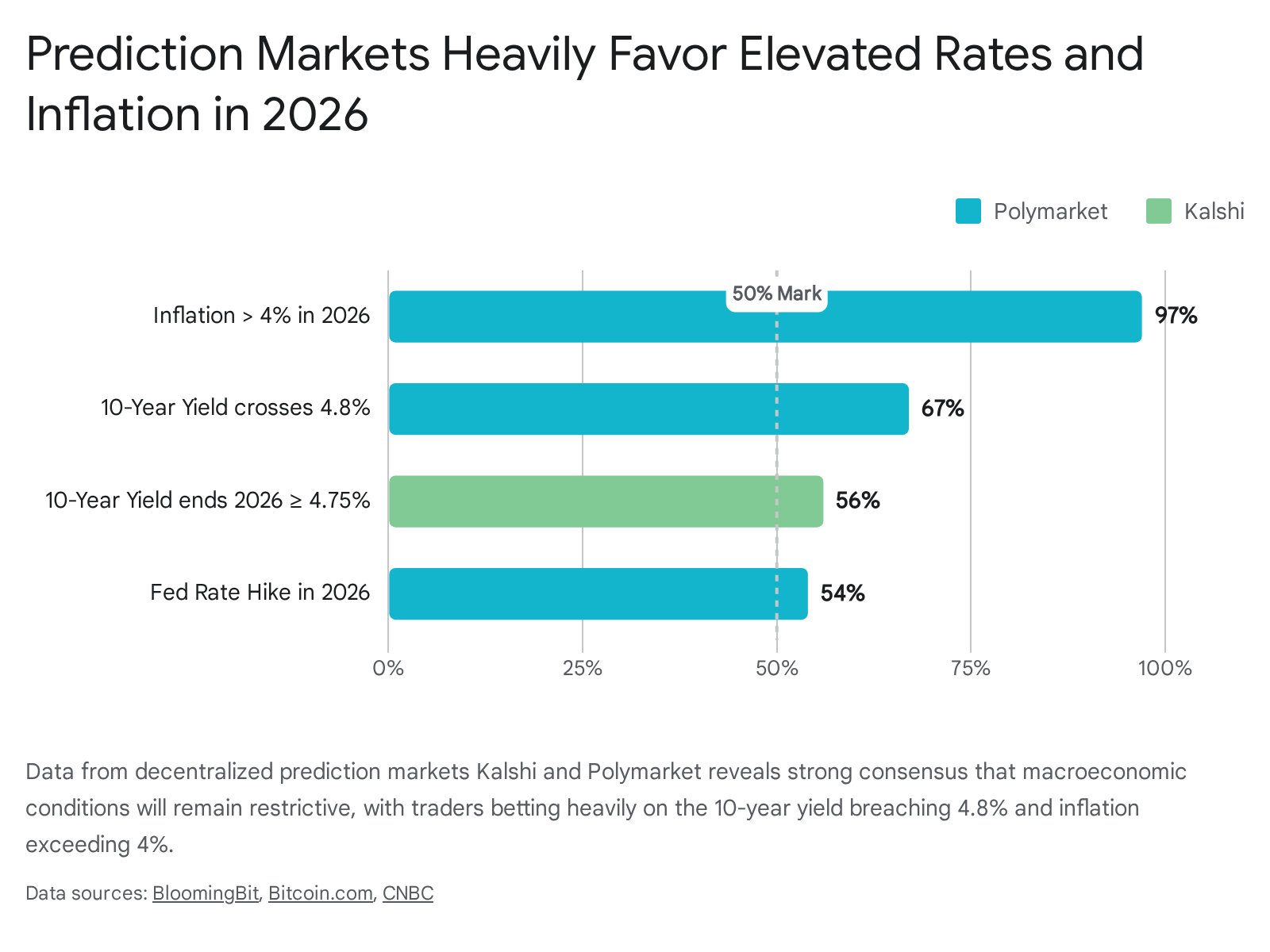
According to CNBC prediction market analysis, speculators on Kalshi assign a 56% probability that 10-year yields stay at or above 4.75%. Meanwhile, Polymarket traders see a 67% chance of yields touching 4.80% in 2026.
- Inflationary Tariffs: A new 50% tariff on Canadian auto imports and metals threatens North American manufacturing supply chains.
- Energy Shock Risk: “Operation Economic Outcast” targets Iranian economic sectors, driving crude oil near $92 per barrel.
- Capital Competition: Tech hyperscalers plan $700 billion in AI capital expenditures, crowding out government debt auctions.
Federal Reserve Independence and Market Impact
Federal Reserve Chair Kevin Warsh maintains a hawkish stance focused squarely on a 2% inflation target. Without central bank debt monetization, Treasury Secretary Bessent must navigate sovereign solvency alone. Relying on the Bessent Put ultimately fails to address the underlying fiscal deficit.
Rising yields ripple across global asset classes, heavily pressuring digital currencies. As the Bitcoin rally faces resistance, crypto assets have dropped nearly 50% from their previous peak. Investors continue prioritizing real yields over non-yielding risk assets.
The Bottom Line
Secondary market buybacks are mere speed bumps against an overwhelming wave of federal paper. Until fiscal spending slows down, traders will continue betting on higher long-term yields. The market has spoken: paper tweaks cannot hide structural math.