The AI boom is delivering record profits to chipmakers—and higher prices to consumers.
The explosive growth of artificial intelligence is reshaping the global semiconductor industry, and its effects are about to hit everyday electronics. From smartphones and laptops to gaming consoles, rising memory-chip costs are setting the stage for more expensive devices in 2026.
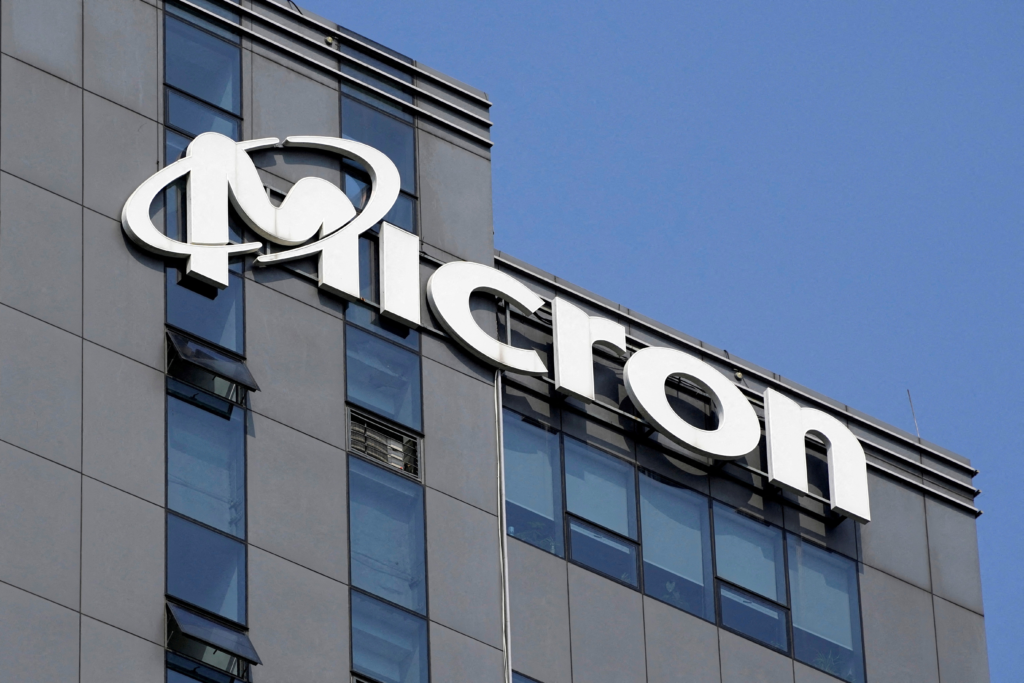
Recent earnings from Micron Technology, one of the world’s largest memory-chip manufacturers, reveal just how tight the market has become and why relief may be years away.
The New Bottleneck: AI vs. Consumer Electronics
AI systems require massive amounts of advanced memory to process data efficiently. As cloud providers and technology giants race to expand AI data centers, they are absorbing a growing share of the world’s memory-chip supply.
That surge in demand is leaving fewer chips available for consumer electronics manufacturers, pushing prices higher across the industry.
Industry researchers report that prices for commonly used DRAM memory modules have climbed sharply in recent months, with further increases expected into next year.
Chip Supply Can’t Scale Overnight
Unlike software, semiconductor manufacturing is slow, expensive, and capital-intensive. New fabrication plants take years to build and require billions of dollars in investment before producing usable chips.
Micron and its peers are increasing capital spending and planning new facilities, including large-scale projects in the United States. However, most of that new capacity will not come online until late in the decade.
Executives across the industry have acknowledged that supply for high-bandwidth memory—critical for AI workloads—will likely remain below demand for the foreseeable future.
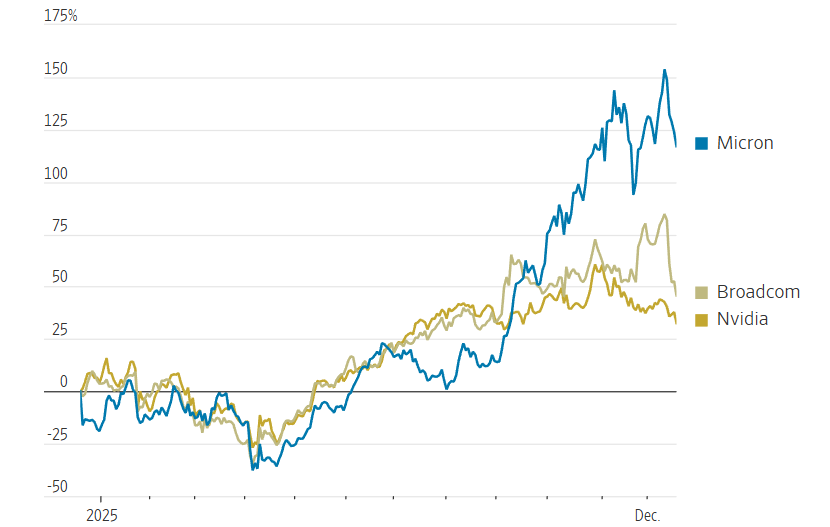
source: Factset/wsj
Device Makers Feel the Squeeze
PC and smartphone manufacturers are already warning investors about rising component costs. Memory represents a significant share of total device expenses, particularly for premium products designed to support AI features.
Some companies are attempting to absorb higher costs through efficiency gains, but others have indicated that price increases may be unavoidable if memory inflation continues.
Higher-end devices are expected to be affected first, as AI-enabled features typically require larger memory configurations.
Consumers May Delay Upgrades
As prices rise, demand could soften. Research firms have already lowered forecasts for global smartphone shipments next year, citing higher production costs and cautious consumer spending.
Gaming hardware may also face pressure, as next-generation consoles require significantly more memory to support advanced graphics and AI-driven features. Even relatively small increases in memory costs per unit can have a meaningful impact on profitability—or retail prices.
Winners and Losers of the AI Boom
For memory-chip producers, tight supply and surging demand are driving record revenues and margins. For consumers, the AI revolution comes with a trade-off: more powerful devices, but at higher prices.
As artificial intelligence continues to dominate technology investment, its ripple effects are becoming increasingly visible beyond data centers—reaching store shelves and checkout counters worldwide.
The AI era may be transformative, but it won’t come cheap.
Related Reads on Wolfow.com
- Microsoft Layoffs AI 2025: Automation Reshapes Tech Jobs
- Affirm Gets $500M Credit Injection from Prudential’s PGIM
- JPMorgan & Amex Raise Premium Card Fees: Here’s Why You’ll Still Pay
Source: Based on reporting by The Wall Street Journal.