
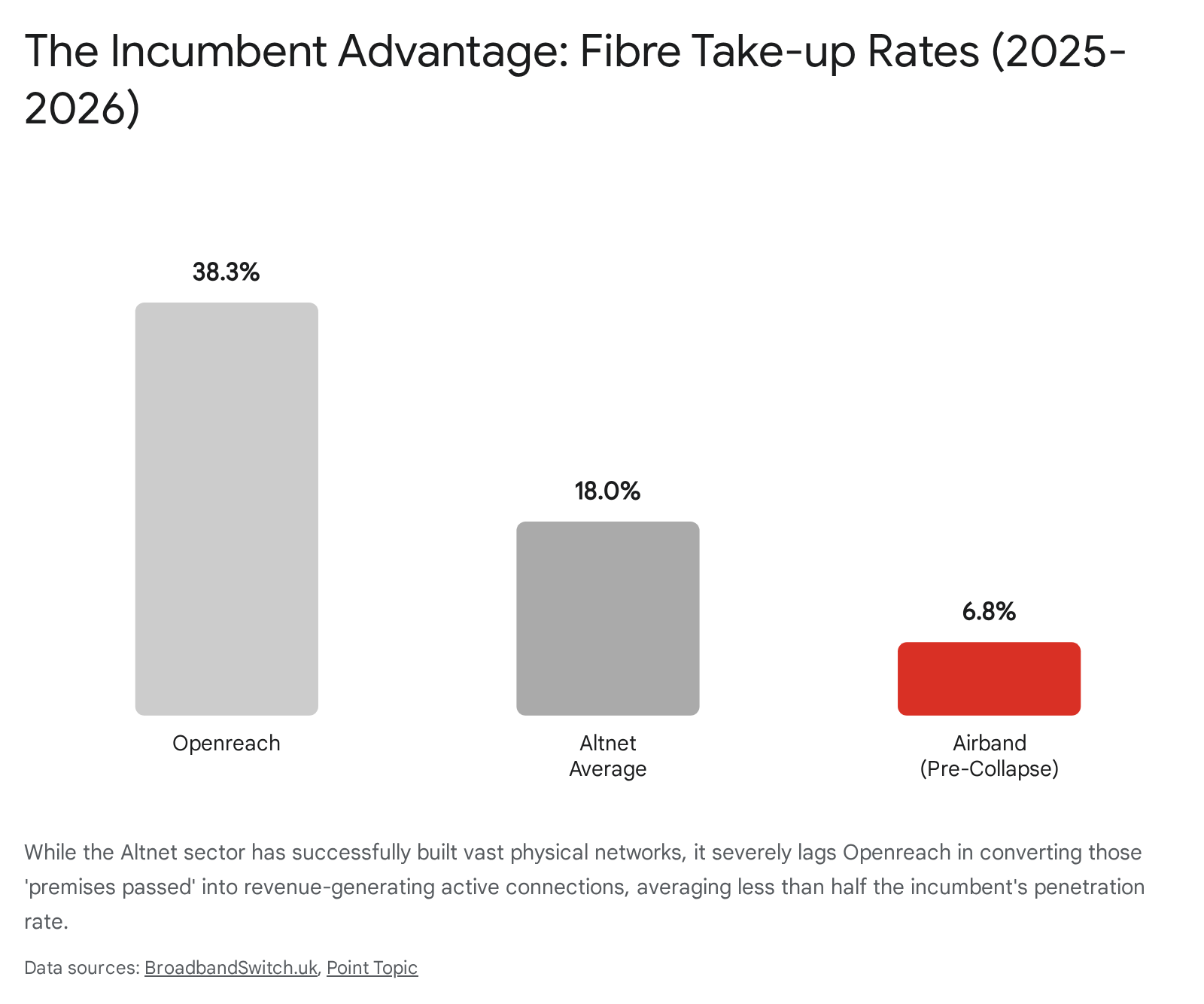
The UK altnet crisis has claimed its biggest victim yet. Asset management giant abrdn just wrote off £200 million after rural broadband provider Airband entered administration. Airband built a vast network passing 440,000 premises across rural England and Wales. However, it signed up only 30,000 active customers. That equals an abysmal 6.8% take-up rate. Rural fibre networks need at least a 20% take-up rate to break even. In 2024, Airband generated just £6.7 million in revenue while losing over £66 million. Total liabilities surged past £224 million. When abrdn stopped funding, the company collapsed.
source: Wolfow
Navigating the UK Altnet Crisis
Cheap debt during zero-interest years fueled massive overbuilding across the country. More than 100 alternative networks borrowed £17.4 billion to lay competing fibre cables. Many operators laid cables down the exact same streets. Today, 13.4 million UK homes can choose between two or more full-fibre networks. This intense duplication triggers destructive price wars. Entry-level full-fibre plans dropped to £29 per month in early 2026.
Now, higher interest rates are crushing these fragile business models. UK altnets currently carry £9 billion in aggregate debt. Sector-wide losses reached £1.5 billion in 2024 alone. Financing costs now consume 121% of total sector revenue. Median altnets owe more in interest than they collect from customers. Lenders are retreating from risky debt extensions, much like NatWest restructured its US operations to manage capital risk.
The Distressed M&A Playbook
When infrastructure builders fail, rival operators strike. Broadband provider Voneus quickly acquired Airband’s assets out of administration. Financial sources confirm Voneus paid less than £10 million for the business. They acquired £200 million worth of physical network and 30,000 active users.
By buying assets through administration, Voneus surgically shed Airband’s £224 million debt burden. Lenders like HSBC and Lloyds suffered massive haircuts on their loan books. Backed by Macquarie Capital, Voneus instantly doubled its active customer base to 60,000 connections. It also expanded its footprint to 170,000 gigabit-ready premises.
Meanwhile, the broader UK altnet crisis is forcing rapid market consolidation. Dominant players like CityFibre and nexfibre are actively absorbing smaller rivals. As reported by the Financial Times, building networks without clear customer demand is no longer viable.
Government Policy and Public Subsidies
Airband relied heavily on government subsidies under the £5 billion Project Gigabit initiative. The company won major regional delivery contracts across Oxfordshire, Devon, and Somerset. However, financial distress forced Airband to scale back its build targets dramatically before collapsing.
Private capital write-downs threaten public digital infrastructure goals. BDUK data shows that 89% of subsidised gigabit connections serve rural areas. These remote communities depend entirely on private operator solvency. When equity partners pull out, rural taxpayers face severe broadband rollout delays.
Key Takeaways for Investors
- £200M Capital Loss: abrdn wiped out 27% of its SLCI II fund on a single failed investment.
- Flawed Build Models: Airband converted only 6.8% of passed homes into paying subscribers before insolvency.
- Fire-Sale Valuation: Voneus acquired £200 million in infrastructure for single-digit millions.
- Crushing Debt Wall: UK altnets face £9 billion in debt while interest costs exceed total sector revenue.