China just sent a shockwave through Silicon Valley. Beijing-based Z.ai saw its shares jump 8.25% following the launch of GLM-5.3-Flash, proving that domestic hardware can drive sovereign AI compute at scale. The company serves this new model entirely on 100,000 local Chinese chips. It delivered top-tier reasoning while cutting costs by 97% compared to Western rivals.
The Rise of Sovereign AI Compute in China
Before its official launch, Z.ai tested the model secretly under the alias “Ox Alpha”. The system processed 62 trillion tokens across five million sessions in days. It captured 31% of weekly coding volume on OpenRouter.
- Shocking Price Tag: Input costs sit at $0.11 per million tokens, while output costs hit $0.39.
- Elite Benchmark: Scores 57.0% on the Intelligence Index, matching Anthropic’s Claude Opus 4.8.
- Extreme Savings: Operates at 1/40th the cost of leading American models.
Z.ai built this powerhouse on local chips by trimming active parameters from 320 billion down to 18 billion per request. This lightweight architecture drastically speeds up generation.
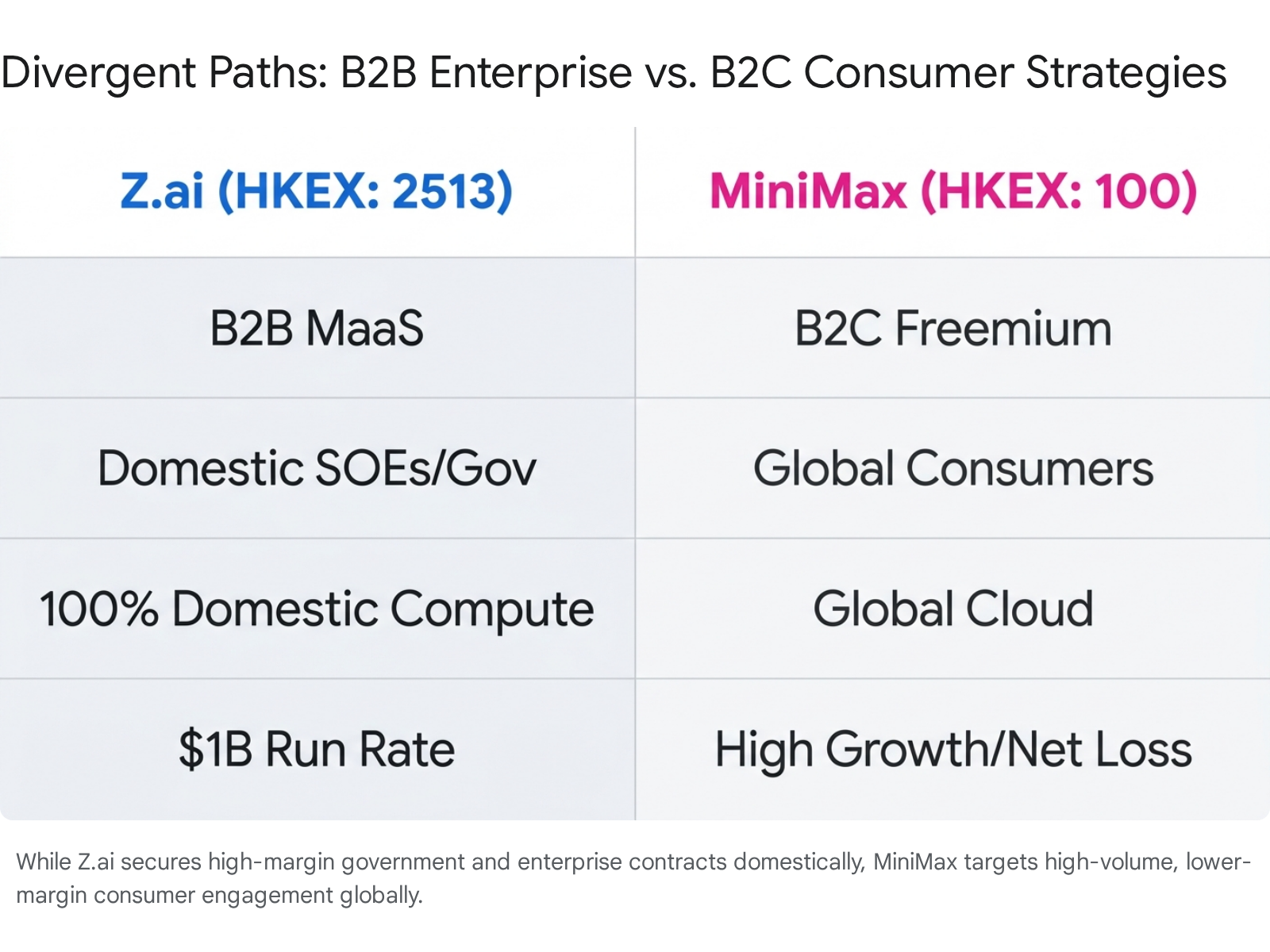
source: Wolfow
Breaking Free From Silicon Bans
US export restrictions intended to choke off advanced semiconductors to China. Instead, Chinese tech giants adapted quickly by building massive data centers. Z.ai operates a 1-gigawatt facility drawing enough electricity to power 750,000 homes. This massive cluster handles millions of requests daily, proving China can maintain robust sovereign AI compute setups without relying on Nvidia hardware.
- Hardware Reality: The cluster relies heavily on Huawei Ascend 950 chips manufactured by SMIC.
- Subsidized Scale: Government backing via the $47.5 billion Big Fund III absorbs production inefficiencies.
- Smart Traffic Routing: Engineers separated prompt processing from text output generation, boosting overall performance by 300%.
Wall Street vs. The Silicon Curtain
The market impact is already spilling over into global finance. Read our complete Nvidia earnings outlook to see how US chipmakers navigate trade hurdles. Nvidia reported $96.2 billion in quarterly revenue, but management warned that data center guidance includes zero sales from China.
Chinese tech giants are shifting $12 billion in hardware orders directly to domestic alternatives. ByteDance alone committed $5.6 billion for 350,000 Huawei processors. As detailed in a recent CNBC report, local tech firms are rapidly scaling sovereign AI compute infrastructure to shield themselves from foreign policy swings.
The Bottom Line
The era of Silicon Valley’s total monopoly on AI hardware is officially ending. Z.ai has shown that software engineering and state capital can bypass hardware blockades. Expect inference costs across the entire market to crash as open-weight models challenge expensive Western software APIs.