Meta just pulled off the ultimate corporate escape act. Facing a staggering $1.4 trillion legal liability over youth addiction claims, the tech giant agreed to pay $17.1 billion. The historic Meta Settlement resolves allegations from 47 states that Instagram and Facebook deliberately hooked teens. This mid-trial exit resolves a massive multi-district litigation in California.
Context Behind the Meta Settlement
State attorneys general targeted Meta’s engagement algorithms using consumer protection laws. Fines stacked up rapidly across thousands of consolidated cases:
- Existential Penalty Threat: Statutory fines reached $53,088 per COPPA violation. That pushed total theoretical liability to $1.4 trillion.
- Courtroom Defeats: A Los Angeles jury found platform design harmful to minors. A New Mexico court also ordered $567 million in abatement funds.
- Dismantled Legal Shields: Appellate courts ruled that Section 230 does not grant immunity for harmful product design choices.
Courtroom Science and Internal Leaks
Expert testimony directly attacked Meta’s platform mechanics. Stanford psychiatrist Dr. Anna Lembke explained how features hijack the brain’s dopamine pathways.
- Variable Reinforcement: Pull-to-refresh feeds and intermittent notifications act like digital slot machines for teenage brains.
- Project MYST Disclosures: Internal Meta studies revealed that parental supervision tools failed to curb compulsive youth scrolling.
- Knowledge of Harm: Documents proved executives knew safety controls were ineffective, establishing legal negligence before the jury.
Game Theory in Action
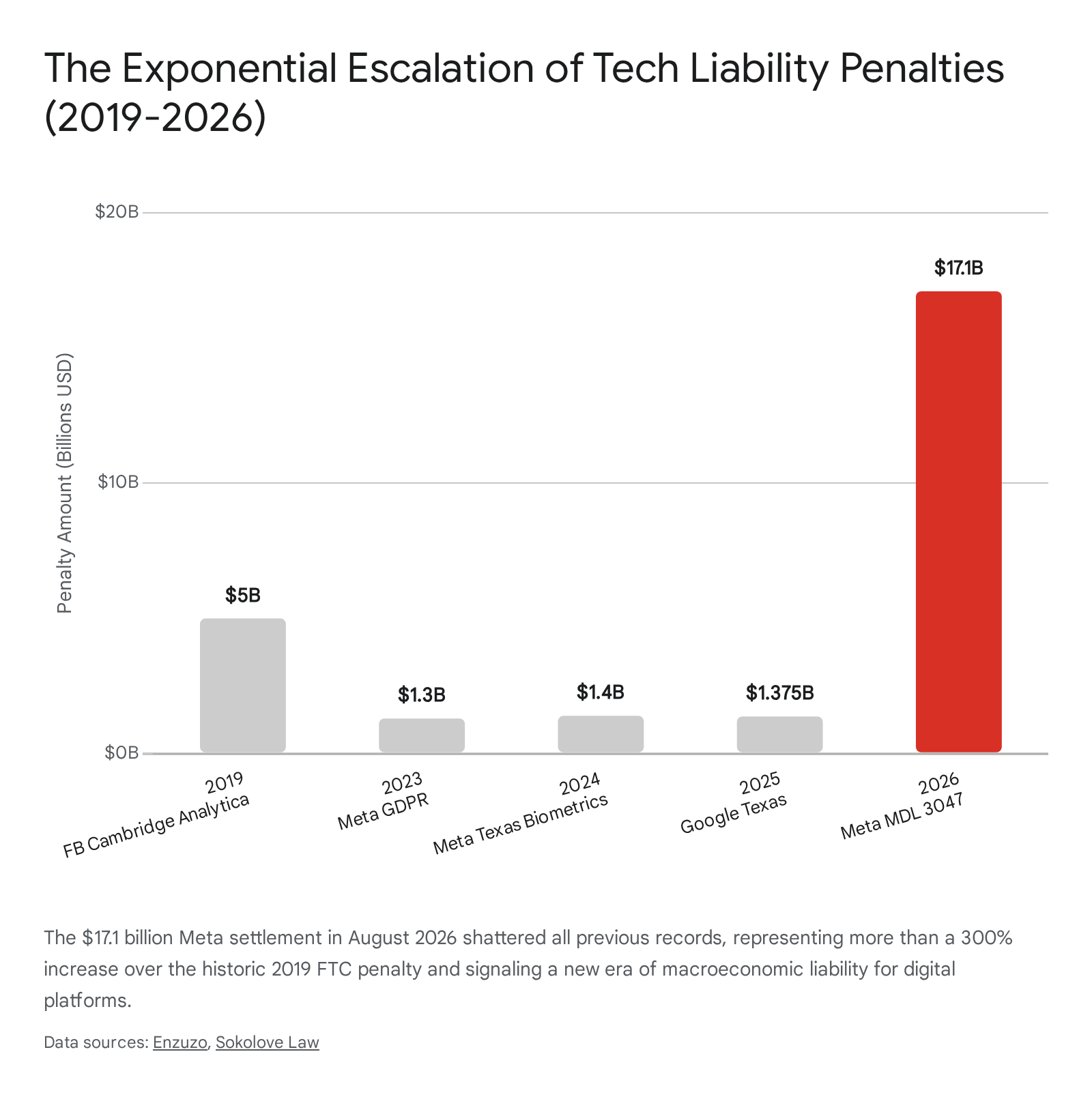
Meta transformed a massive sanction into a competitive strategy against rival platforms. The agreement divides cash payments over a ten-year schedule.
source: Wolfow
Strategic mechanics of the deal include:
- Base Amortized Payouts: Meta will distribute $11.8 billion directly to state youth mental health programs over ten years.
- The Rival Trap: Meta withheld $5.3 billion under a matching clause. State enforcers must force YouTube and TikTok to adopt identical daily limits.
- AI Safeguards: The agreement excludes generative AI tools, protecting Meta’s planned $130 billion to $145 billion capital expenditure budget.
Wall Street Reaction and Platform Redesigns
Meta accepted strict platform guardrails for underage accounts. Instagram must enforce a two-hour default daily limit, nighttime notification blocks, and non-personalized feed options. Meta also removed cosmetic surgery filters and public like counts for minors.
Despite these concessions, Meta stock surged 4.4% in premarket trading. Wall Street welcomed the Meta Settlement because it converted an existential threat into an affordable yearly expense. The annual cost represents roughly 3% of Meta’s $48.25 billion free cash flow.
Much like evolving financial rules detailed in US Banking Regulation Split, big tech must adapt to shifting legal standards. For further background on the court proceedings, review the original news coverage. Meta capped its tail risk at 1.2% of maximum exposure, clearing the path for future AI expansion.